Getting a Cat in Retirement: The Complete Guide
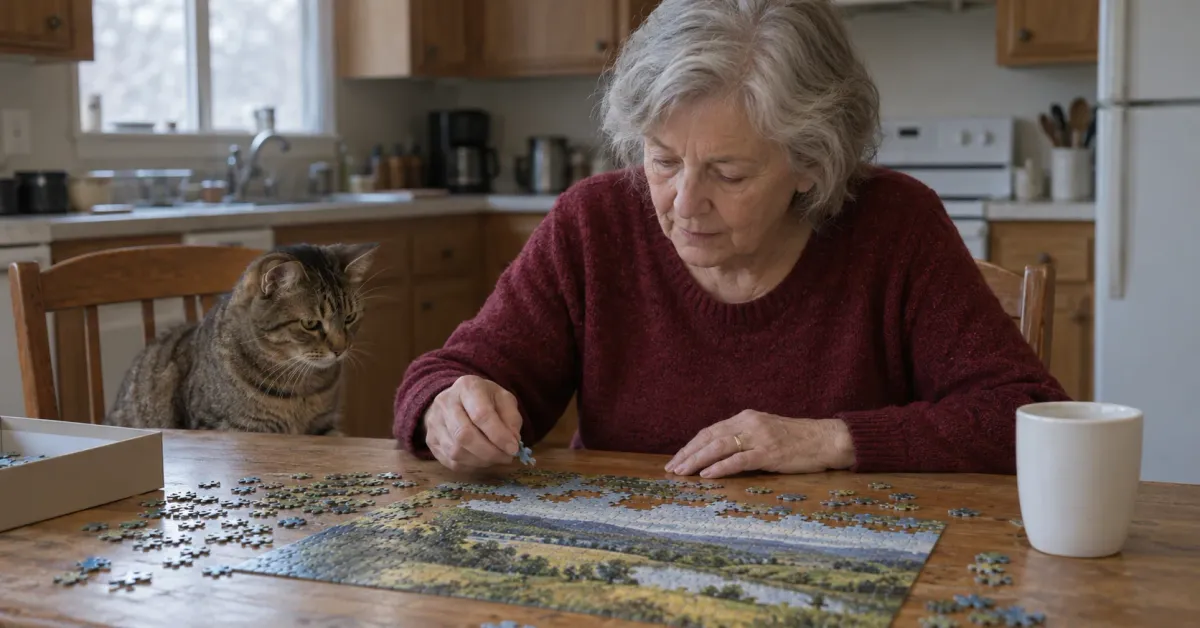
My mom retired from a local bank at 67. For years her days had been full of customers, coworkers and people from town stopping by to chat. Then, almost overnight, they weren’t.
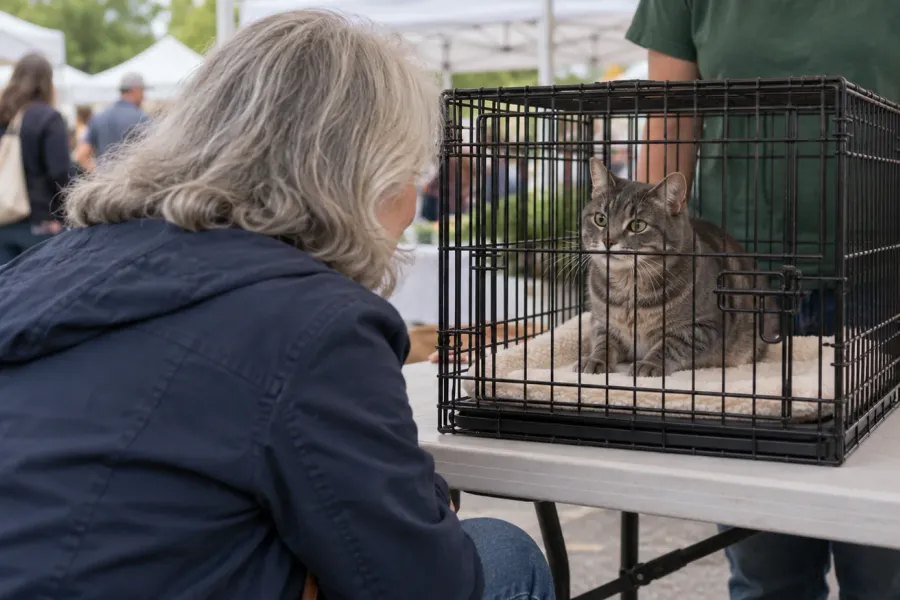
She wasn’t going out much that first year, and it started to worry her. She wanted to stay sharp and focused, and she wanted her days to have some structure again. So when a local shelter set up a pop-up adoption event at the farmers market, she went with a plan. At 68, she came home with a kitten. That kitten was Cleo.
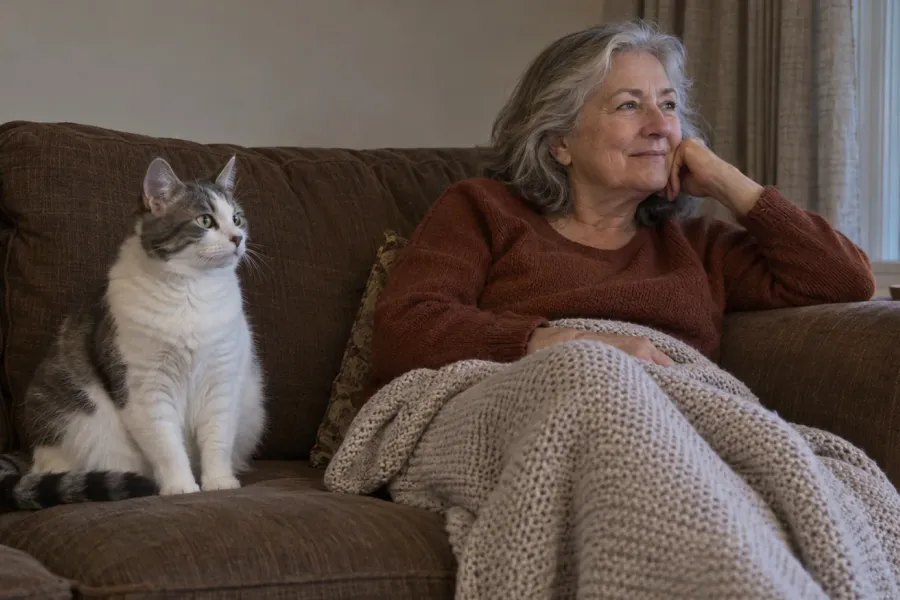
That was four years ago, and Cleo has given my mom’s days a shape ever since: breakfast at the same time every morning, a nap upstairs every afternoon, and Jeopardy on the couch every evening.
If you’re thinking about getting a cat in retirement, this guide brings together everything on this site, in the order you’ll need it. Each section gives you the short version, with a link to the full post if you’d like more.
Part 1: Deciding
Is a Cat Right for You Now?
The reasons people give for wanting a cat in retirement often sound a lot like my mom’s: company in a quiet house, a reason to get up at a set time, something to look after. A cat delivers on those better than most people expect. She also asks for a few things in return, and it’s worth thinking them through before you start looking.
- Daily care. Two meals, fresh water and a litter box to scoop. None of it takes long, but it happens every day.
- A budget. Food, litter and regular vet visits are the steady costs. An adult cat from a shelter usually arrives already spayed and vaccinated, which keeps the first year more manageable.
- Help when you’re away. Trips, appointments and the occasional surprise all need someone who can step in.
- Your home. A cat fits into almost any home, but it’s worth thinking about stairs, where a litter box could go, and how much bending you’d like to do each day.
If you read that list and thought “I can manage that,” you’re probably ready. If one item gave you pause, it’s usually something to plan for rather than a reason to say no.
For what a cat tends to give back, see 5 ways your cat is already improving your health.
Kitten, Adult or Senior Cat?
This is the first real choice, and it shapes everything after it.
A kitten is lively, funny and a good deal of work for the first year: night-time energy, scratching, getting into everything, and several vet visits. Above all, a kitten is a surprise. Nobody can tell you what she’ll be like when she grows up.
My mom found that out. She’d had cats most of her life, and every one of them loved being held. She chose Cleo as a kitten, hoping for another lap cat. Cleo grew into a cat who would rather sit beside you than on you, and who answers a hand reaching for her belly with a quick slap. She’s still wonderful company, just not the company my mom expected.
An adult cat, roughly three to six years old, is a known quantity. Her personality is settled, the kitten phase is behind her, and shelter staff can usually tell you exactly what she’s like. A senior cat, seven or older, is calmer still, and often overlooked at shelters.
The full case is in Adopting a Cat in Retirement: Why a Rescue Might Be the Better Choice.
Breed or Personality?
Many people begin by looking up the best cat breeds for seniors, and that’s a useful place to start. Some breeds are known for being calm and affectionate, others for being talkative or needing a lot of play, and long-haired breeds need regular grooming.
Within any breed, though, every cat is an individual, and most shelter cats are mixed breeds whose personalities you can meet in person. Many find it works well to use breed as a rough guide and let personality decide.
Our guide to choosing the right cat breed for retirement walks through which breeds tend to suit a busy household and which suit a quiet one.
Part 2: Finding Her
Where to Look
There are three good places to start:
- Your local shelter. You can visit, meet several cats, and talk with staff who know them.
- Pop-up adoption events. Shelters often bring cats to pet stores, fairs and farmers markets. My mom has adopted every one of her cats at events like these, and that’s where she met Cleo.
- Rescue groups. Many smaller rescues keep their cats in volunteers’ homes, so the person fostering her can tell you how she behaves in an ordinary house.
Wherever you meet her, it’s worth seeing her more than once if you can. A cat at a busy event may be quite different in a quiet room.
What to Ask the Shelter
The few minutes you spend talking with shelter staff are some of the most useful of the whole adoption. Ask about her personality (does she like being held, and how does she handle noise and visitors?), her health and records, what food and litter she’s using, and what happens if things don’t work out.
It’s worth asking yourself a few questions too: what you’re hoping for, who would look after her when you’re away, and whether your home is ready.
The full list is in What to Ask the Shelter Before You Adopt a Cat.
Part 3: Bringing Her Home
Getting Your Home Ready
You don’t need much to begin. A short list covers it:
- Food and water bowls
- The food she’s been eating at the shelter, at least to start
- A litter box and the same kind of litter the shelter uses
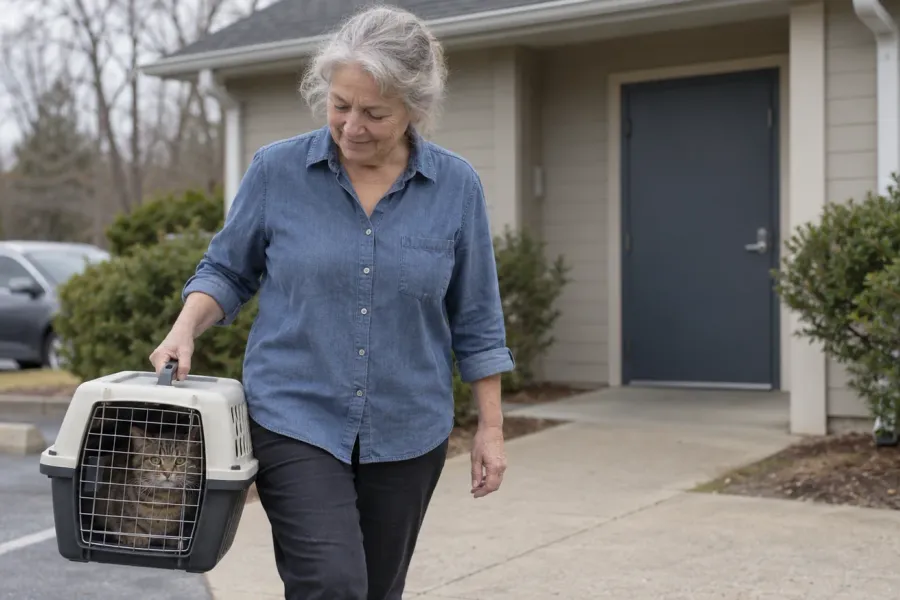
- A carrier, for the trip home and every vet visit after
- A scratching post
- A soft bed, plus somewhere to hide, like a cardboard box on its side with a towel inside
- A wand toy and a brush
Then choose one quiet room to be hers for the first few days, such as a spare bedroom or den with a door that closes. Put her food and water on one side, the litter box on the other, and a comfortable chair in the corner for you.
The First Week
The first week rarely looks the way we picture it. She may hide for a day or several, eat very little, and explore only at night. All of that is normal. The gentlest approach is to set the carrier down in her room, open the door, step back, and let her come out in her own time.
Many shelters describe what comes next with the 3-3-3 rule: about three days to take it all in, three weeks to settle into the routine, and three months to feel truly at home. Treat it as a guide rather than a schedule. Some cats are strolling around the house within days, and others take longer.
Everything else is in Your Cat’s First Week Home: A Gentle Settling-In Guide.
Her First Vet Visit
Even if the shelter has taken care of her vaccinations, it’s worth booking a check-up with your own vet. Veterinary guidance suggests scheduling it within the first few days after adoption and bringing any medical records the shelter gave you.
That first visit gives your vet a picture of her health to compare against in the years ahead, and gives you a chance to ask about food, weight and anything you’ve noticed. It also means that if something comes up later, you already have a vet who knows her.
One small habit helps with every visit after: leave the carrier out in her room with a towel inside, so it becomes a familiar place to nap rather than something that only appears before a trip to the vet.
Part 4: Life Together
Building a Routine
This is where the structure my mom was hoping for came from. Cats notice patterns quickly, and within a few weeks most will start turning up a few minutes early for breakfast, in case you’d forgotten.
Two meals at steady times are the anchors. Around them you might add a few minutes with the wand toy at midday, a short play session before dinner, and a quiet wind-down in the evening. The rest of the day can be as loose as you like.
Some of the routine will be hers. Cleo picked her own fixed points: following my mom upstairs at nap time, and joining my parents on the couch when Jeopardy comes on. It’s worth noticing the habits your cat chooses and keeping them.
There’s a full morning-to-bedtime plan in Building a Daily Routine With Your Cat.
Getting to Know Her
Her real personality comes through over the first few months. She may turn out to be a lap cat. She may turn out like Cleo, who will sit in a lap for five or ten minutes, on the strict condition that nobody touches her.
An independent cat can be every bit as attached to you. Watch for the quieter signs: following you from room to room, coming when you call, chirping back when you talk to her, and choosing a spot near you rather than on you.
More on this in Not Every Cat Is a Lap Cat (And Why That’s Okay).
When Family Visits
Many cats hide when the house fills up. When the grandkids arrive, Cleo is under my parents’ bed before anyone has reached the front hall. Half an hour later she comes back down to watch from a doorway.
Give your cat a quiet place to retreat to, keep her mealtimes steady, and ask young visitors to let her come to them. There’s more in When the Grandkids Visit.
Trips, Appointments and the Unexpected
Sooner or later, someone else will need to look after her. Ideally that’s someone she already knows, visiting her at home, where her own bed and window stay just where they were. For Cleo it’s my brother, who lived with my parents when she was a kitten.
Write her care down on one page: food, water bowls, litter, her habits, and who to call. Before every trip, my mom leaves my brother a checklist on the kitchen counter, with the upstairs water bowl near the top. And it’s worth keeping a small card in your wallet saying you have a cat at home, in case something unexpected happens.
The full plan is in Who Will Feed the Cat? Planning for Trips, Appointments and the Unexpected.
At a Glance
For the fridge door, here’s the whole journey in ten steps.
- Decide: daily care, a budget, and someone to help when you’re away.
- Choose an age: kitten, adult (about three to six) or senior.
- Use breed as a guide, and let personality decide.
- Meet cats at a shelter, a pop-up event or a rescue group.
- Ask the shelter about her personality, health, food and litter.
- Get the basics and set up one quiet room.
- Let the first week go at her pace.
- Book a vet check-up in the first few days.
- Set two steady mealtimes and build the routine from there.
- Line up a helper and write her care down on one page.
Four Years On
Cleo is four now. She still won’t stay in a lap if anyone touches her, and she still disappears under the bed when the doorbell rings. She also still follows my mom upstairs every afternoon, nips at my dad if breakfast is running late, and takes her place on the couch beside my parents when Jeopardy comes on.
My mom went to the farmers market looking for some structure for her days. She’s had it ever since.
Here’s to finding the cat who does the same for you.