What to Ask the Shelter Before You Adopt a Cat
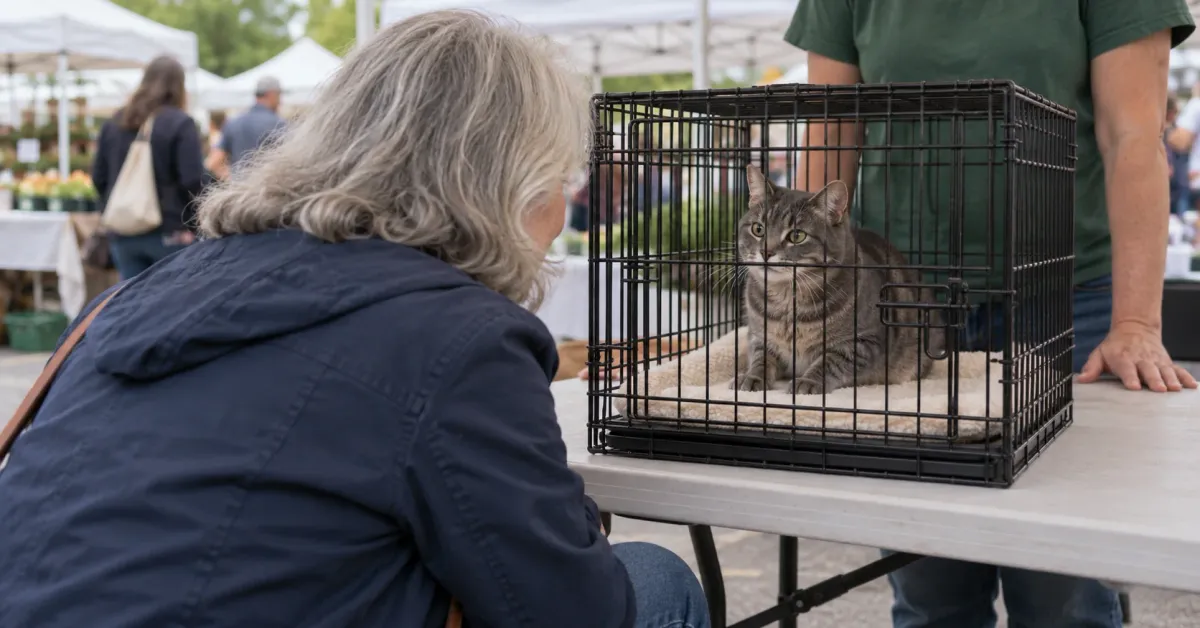
My mom has adopted every one of her cats the same way: from a local shelter’s pop-up adoption event. A few of them were spur-of-the-moment decisions. She went out for something else and came home with a cat.
Cleo was different. The family dog had passed away a year or two earlier, and my parents had been talking for a while about getting a cat. So when a local shelter set up at the farmers market, my mom went with a plan, and she came home with a kitten.
Whether you’re planning ahead or you’ve just met a cat who stopped you in your tracks, the few minutes you spend talking with shelter staff are some of the most useful minutes of the whole adoption. Here’s what’s worth asking.
Why the Questions Matter
Shelter staff and volunteers often know a great deal about the cats in their care. They’ve fed them, cleaned up after them, and watched how they react to noise, handling and new people. Much of that never makes it onto the card on the front of the crate.
Good shelters want a good match as much as you do. A cat who goes to the right home stays there. So don’t feel shy about asking. A thoughtful list of questions tells the staff you’re taking the decision seriously.
About Her Personality
This is where an adult cat has a real advantage. With a kitten, nobody can tell you for certain what she’ll be like in a year. My mom found that out with Cleo, who grew into a cat who would rather sit beside you than on you. With an adult cat, the staff can usually tell you a lot.
- How does she act with the staff? Is she friendly, shy, or somewhere in between?
- Does she like being picked up and held? If a lap cat matters to you, ask this one directly.
- How does she handle noise and new people? This matters if you have grandchildren or regular visitors.
- Do you know anything about her life before the shelter? Did she live in a home? With children, other cats or dogs?
- How long has she been here, and has she changed since she arrived?
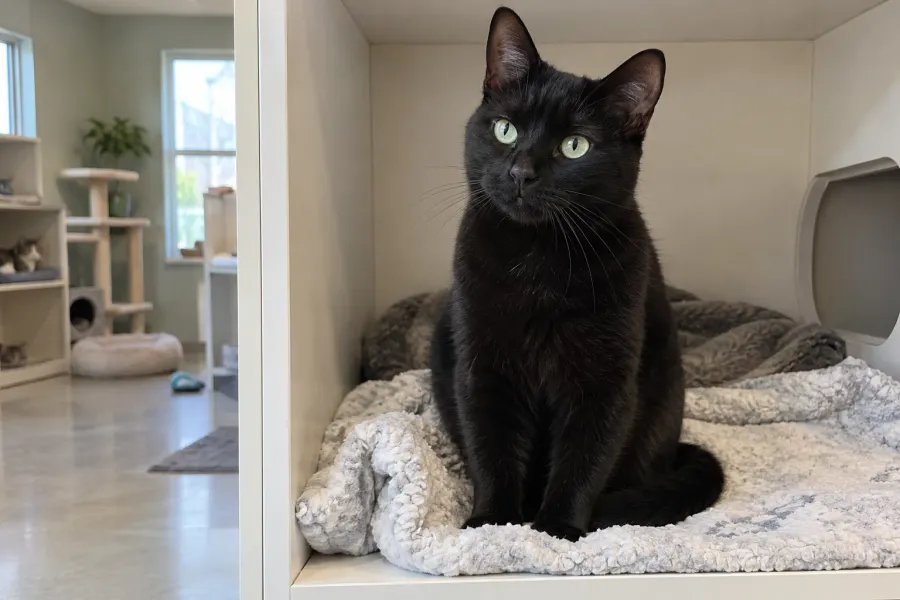
About Her Health
You don’t need to be an expert to ask good health questions. What matters is leaving with the paperwork and knowing what to take to your own vet.
- What vet care has she had here? Ask about vaccinations and any treatment she’s received.
- Is she spayed and microchipped?
- Does she have any health conditions or need any medication?
- Can I have copies of her records? Bring these to your first vet visit.
- What food is she eating now? Keeping her on the same food for the first while can make the move a little easier on her.
If anything comes up that you’re unsure about, it’s fine to say you’d like to check with a vet before deciding.
About Daily Life
These are the small, practical questions that make the first week go more smoothly.
- What kind of litter is she using? Starting with the same kind helps.
- How does she do when she’s left alone?
- Does she have any habits the staff have noticed? Favorite toys, favorite spots, things that worry her.
About the Adoption Itself
- What does the adoption fee cover? Often it includes vaccinations, spaying and microchipping, but it’s worth confirming.
- What happens if it doesn’t work out? Ask about the shelter’s return policy. Most people never need it, but it’s good to know.
- Can I call you with questions after she comes home? Many shelters are happy to help.
- Can I come back and see her again before I decide?
A Few Questions to Ask Yourself
The shelter’s answers are only half of it. Before you sign the papers, it’s worth being honest with yourself too:
- What am I hoping for? A lap cat, a quiet companion, a playful one?
- Who would look after her when I travel or have an appointment? There’s more on planning for that ahead of time.
- Does the budget work for food, litter and regular vet visits?
- Is my home ready? A quiet room for the first few days is all she needs to start. Our guide to her first week home walks through it.
If You Meet Her at an Adoption Event
Pop-up events like the one where my mom found Cleo are a wonderful way to meet cats. They’re also busy and noisy, with crowds, traffic and strangers peering into every crate. A cat who seems shy at a farmers market may be very different in a quiet room, and a cat who seems calm may simply be overwhelmed.
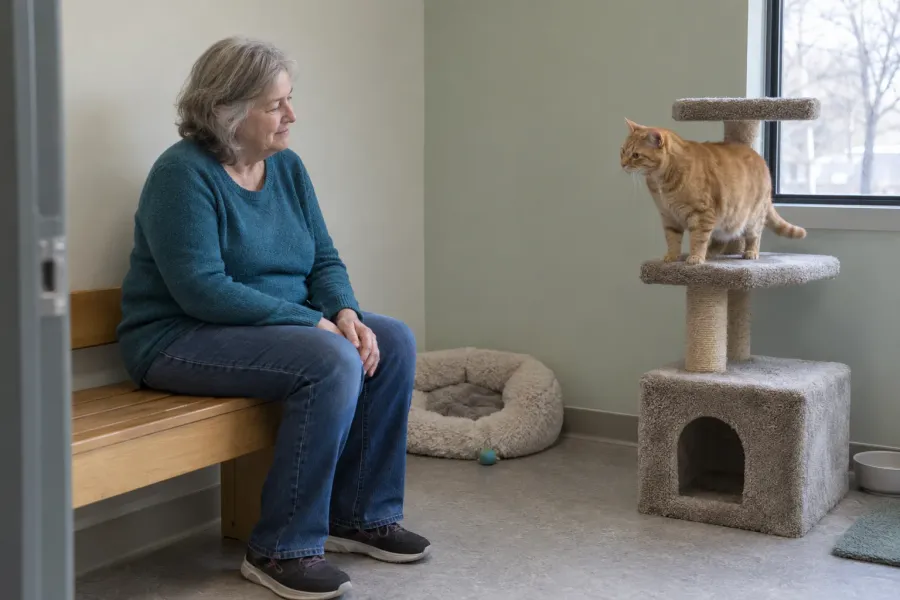
So it’s worth asking the staff how she is back at the shelter, where she’s more settled. If you’re not sure, you can ask whether you could visit her there before deciding. And if you’d like a day to think it over, most shelters understand. The right cat is worth a little patience.
Some of my mom’s adoptions were spur-of-the-moment, and they worked out. A few good questions simply make it more likely that yours will too.
Spend Some Time With Her
However many questions you ask, nothing replaces time with the cat herself. Sit down, be quiet, and let her come to you rather than reaching for her. Notice whether she’s curious or anxious, whether she settles near you or keeps her distance. There’s more on what to look for in why a rescue cat might be the better choice.
Where It Starts
Cleo came home from a tent at the farmers market. Four years later, she joins my parents on the couch every evening, on her own terms, and follows my mom upstairs for her afternoon nap.
Every cat’s story starts with someone stopping at a crate and asking a few questions. Here’s to asking good ones.
This post is part of our complete guide to getting a cat in retirement.