Your Cat's First Week Home: A Gentle Settling-In Guide
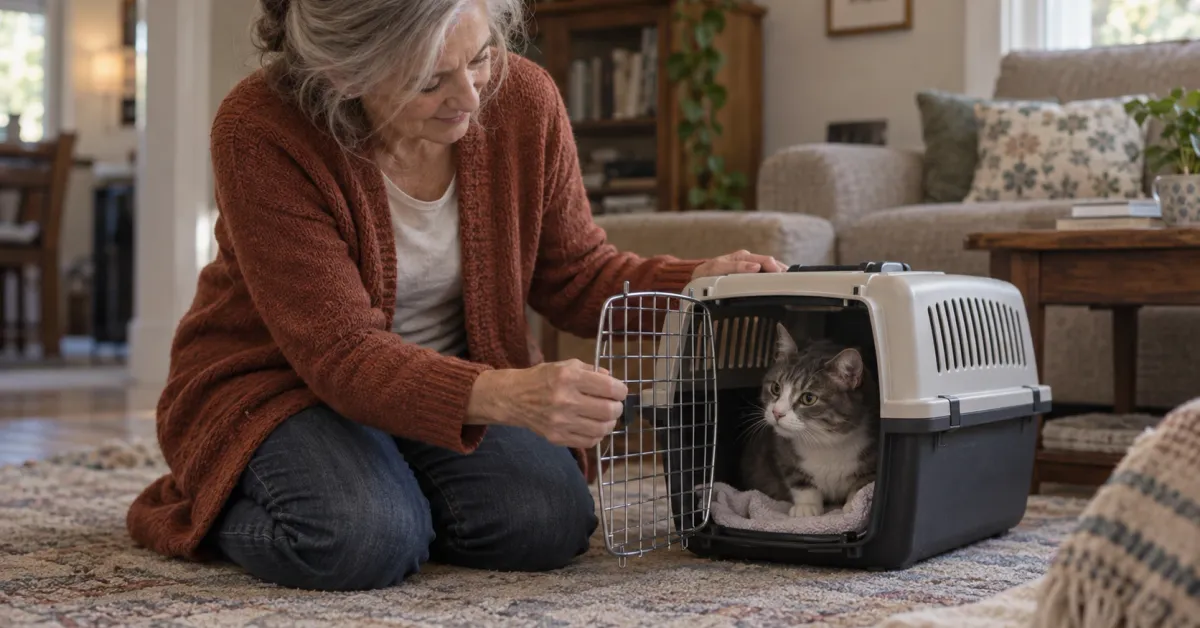
The paperwork is signed, the carrier is buckled into the back seat, and somewhere behind that little wire door is the cat you’ve been thinking about for weeks.
The drive home feels longer than it should. Every few minutes you glance back, and every few minutes she’s exactly where she was: pressed into the far corner, watching.
If that’s roughly where you find yourself, welcome. The first week home is one of the loveliest stretches you’ll share with your cat, though it rarely looks the way we picture it.
It’s quieter, slower, and a little stranger than expected, and most of what looks like nothing happening is actually everything going well.
The fact that you’re reading up before she arrives, or while she’s still hiding behind the sofa, says a great deal about the home she’s just joined.
Let’s walk through the week together: what to set up, what to expect, and when the kindest thing you can do is simply wait.
Before She Arrives: One Small Room, Ready and Waiting
A whole house is a lot to take in when you’re new and roughly ten inches tall.
Many new cat owners find it helpful to begin with just one quiet room instead: a spare bedroom, a den, any calm space with a door that closes. To a newly arrived cat, one manageable room feels far safer than an entire home she hasn’t mapped yet.
Setting it up takes less than an afternoon.
She’ll need food and water bowls on one side of the room, a litter box on the opposite side (cats prefer to keep dining and plumbing well apart), and somewhere soft to sleep.
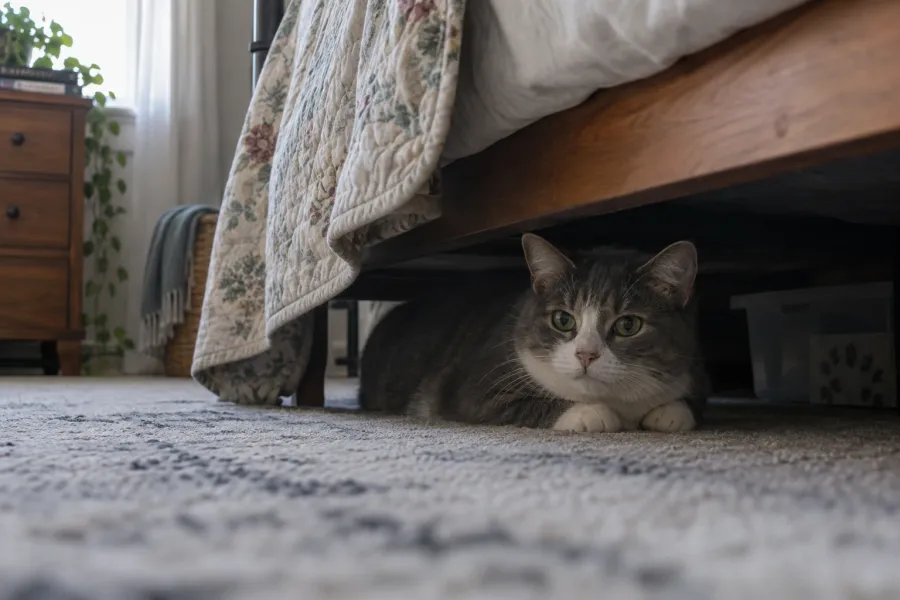
Just as important is somewhere to hide. A cardboard box tipped on its side with a folded towel inside works beautifully, and so does simply leaving clearance under the bed.
If the shelter can send along a blanket or toy that smells like her old space, tuck it into the room. Familiar smells in an unfamiliar place do quiet, useful work in those first days, especially for a rescue cat leaving the only routine she’s known.
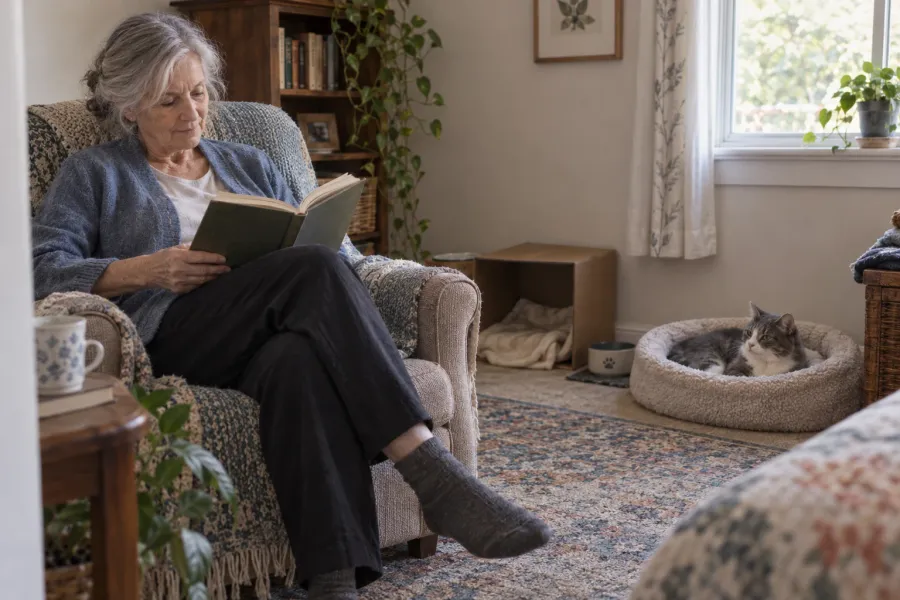
One more addition worth considering: a comfortable chair for you. You’ll be spending pleasant, unhurried time in this room over the coming week, and there’s no reason to do it sitting on the floor.
Arrival Day: Open the Carrier Door and Step Back
The temptation on the first day is to help. To lift her out, show her the food, introduce her to the sunny windowsill you know she’ll love.
A gentler approach is to set the carrier down in her room, open the door, and then settle into that comfortable chair with a book.
She may step out in five minutes. She may stay in the carrier for three hours and only emerge once you’ve left the room.
Both are perfectly fine.
Coming out on her own paws, in her own time, is how a cat decides a place is safe, and that decision can’t be hurried along by anyone.
For today, less is truly more. Consider keeping the household quiet, saving visits from family and friends for later in the week, and letting the vacuum have a day off.
If you feel like talking to her while you sit nearby, go for it! A calm voice from a person who isn’t reaching for her is one of the most reassuring sounds in her new world.
Then, at some point, close the door gently behind you and let her have the room to herself for a while. First nights are for exploring in private.
What’s Perfectly Normal (Even When It Feels Worrying)
Here’s the part nobody puts in the adoption brochure: a settling-in cat can look, like an unhappy cat.
She hides. She barely touches her food. She wants nothing to do with your lap. It’s hard not to take it personally, and harder still not to worry.
So it helps to know what’s ordinary for a first week.
Hiding for several days is ordinary. Eating lightly at first is ordinary. Exploring the room at two in the morning, when the house is silent and she feels braver, is not only ordinary but a very good sign; it means she’s curious.
A cat who watches you from under the bed is not rejecting you. She’s studying you, and cats are thorough students.
Progress in the first week is measured in small things: eating a bit more today than yesterday, choosing the box beside the bed instead of underneath it, a tail that’s up instead of tucked.
If her appetite stays worryingly small or something simply feels off to you, a quick call to your veterinarian’s office costs nothing and settles the mind, and the staff there are used to first-week questions.
Opening Up the House, One Door at a Time
Somewhere around the middle of the week, many cats begin telling you they’re ready for more.
She meets you at the door of her room. She peers down the hallway with obvious interest. She’s eaten well for a couple of days and walks around her room like she owns it, because by now she believes she does.
When those signs appear, you might consider opening her door and letting her explore a little more of the house while you go about your day nearby.
There’s no need for a grand tour. Cats prefer to expand their territory the way they do everything else: gradually, thoroughly, and on their own schedule. One or two new rooms at a time is plenty.
Keep her original room exactly as it is during this stage, with the litter box, food, and hiding spots all in their familiar places. That room is her home base now, and knowing she can retreat to it is precisely what gives her the confidence to wander.
If something startles her mid-exploration and she bolts back to it, nothing has gone wrong. She’s simply using the system the two of you built.

The First Threads of a Routine
One of the quiet advantages of a retired household is that it runs on rhythm rather than rush, and rhythm is exactly what a new cat is listening for. She’s learning your patterns from day one: when the kettle goes on, when the curtains open, when footsteps mean breakfast.
You can put that to gentle use. Feeding her at the same times each day gives the week its anchors, and meals delivered reliably by the same kind hands do more to build trust than any amount of coaxing.
Short, predictable visits to wherever she’s chosen to settle, a few minutes of quiet talk, maybe a slow wand toy dragged along the floor if she’s interested: these small repetitions are the actual material trust is made from.
And if she’s interested in none of it yet, sit in the room and read anyway. Time spent nearby, asking nothing of her, is never wasted.
Many new owners find that the first real approach, the first head bump against a shin, happens on an evening when they’d stopped waiting for it and were simply there.
When the Kindest Thing Is to Wait
Every settling-in guide eventually arrives at the same place, and it’s here: most of what helps a new cat feel at home isn’t something you do. It’s something you refrain from doing, patiently, over and over.
Waiting is harder than it sounds. You adopted her because you wanted company, and for the first few days the company is under the bed.
But the person who let her hide without dragging her out, who fed her on time and asked for nothing, is becoming, in her eyes, the safest thing in the house.
Some cats need less than a week to settle, some considerably more, and a slow start says nothing at all about the companion she’ll become. Some of the most devoted lap cats spent their entire first week as a pair of eyes beneath a dresser.
The Week Everything Starts
By this time next week, you’ll know things about her that no shelter form could have told you. Which windowsill she’s claimed. What her small hours sound like. The particular question mark of her tail when she rounds the kitchen doorway to see what you’re up to.
She’ll know things too: your footsteps, your reading chair, the sound of the drawer where the food lives. Neither of you will remember deciding to relax around the other. It will simply have happened, somewhere between the first hidden night and the first slow blink across the room.
That slow blink, when it comes, is worth the wait. Here’s to a gentle first week, for both of you.