Holiday Hazards for Cats: A Calm, Practical Guide
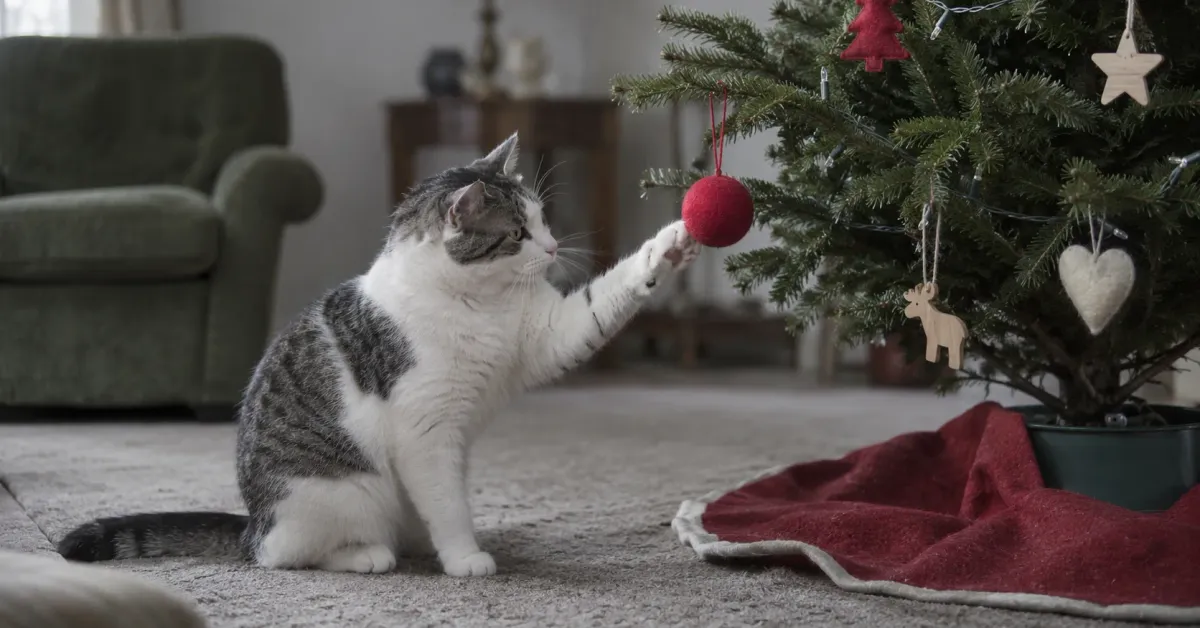
Every December, my parents put up their Christmas tree, and every December, Cleo inspects it.
So far her interest has stopped at the lowest branches. She bats at the ornaments she can reach from the floor and leaves the string lights alone. We’ve been lucky. Most cat owners have heard a story or two about a tree that came down in the night.
Ribbon is another matter. Cleo loves ribbon and tinsel, and she’ll try to eat them, so my parents keep both well out of her reach.
The holidays bring a lot of new things into a cat’s home in a few short weeks: plants, decorations, rich food, visitors and open doors. Most of it is harmless. A handful of things are worth knowing about, and a little planning takes care of nearly all of them. Here’s a calm, practical guide, from Thanksgiving through New Year’s.
Flowers and Plants
Lilies: the one to take seriously
If you remember one thing from this post, make it this one. Lilies are a common part of holiday and Thanksgiving bouquets, and they’re one of the most dangerous plants a cat can come across.
The FDA explains that every part of a true lily or daylily is toxic to cats: the stem, leaves, flowers, pollen and even the water in the vase. A cat can be poisoned just by licking a little pollen off her fur, and the result can be kidney failure within a few days. Easter, Asiatic, Oriental and tiger lilies all belong to this group.
The safest approach is to keep lilies out of a home with a cat altogether. When you order flowers, or when someone asks what you’d like, it’s worth saying “no lilies, please.” If a bouquet with lilies does arrive, it can go to a friend without a cat, or on the porch.
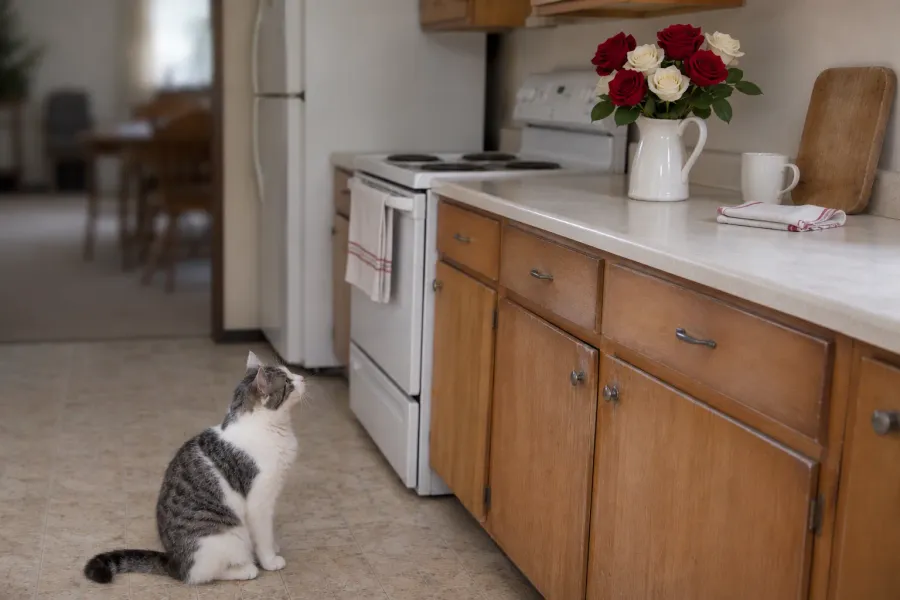
If you’d like holiday flowers you don’t have to worry about, roses are a good choice. The ASPCA lists them as non-toxic to cats, so a bouquet of roses can sit wherever you like, even somewhere she can reach. Chrysanthemums, a common filler in holiday bouquets, are mildly toxic, so it’s worth leaving those out too.
If you think your cat has touched a lily in any way, call your vet straight away, even if she seems fine. With lilies, getting help early makes a real difference.
Poinsettias, mistletoe and holly
Poinsettias have a worse reputation than they deserve. Pet Poison Helpline describes them as only mildly toxic to cats. A cat who chews on one may drool or vomit, but serious harm is unlikely. It’s still kindest to keep them up high or in a room she doesn’t use.
Mistletoe and holly are more of a concern. The ASPCA notes that both can cause stomach upset and heart problems if eaten. Artificial versions look just as festive and remove the worry entirely.
The Tree
Whether your tree is real or artificial, a few small steps go a long way:
- Make sure it’s steady. A sturdy stand helps, and some people secure the top to a wall or window frame with fishing line or a small hook, in case a curious cat decides to climb.
- Cover the water. The ASPCA recommends keeping tree water covered or out of reach. Standing water can grow bacteria that upset a cat’s stomach.
- Hang breakable ornaments up high. Keep the lower branches for unbreakable ones, like felt, wood or fabric. If your cat is anything like Cleo, those lower ornaments will be batted around, so they may as well be ones that can take it.
- Tuck the cords away. Run light cords along the wall or behind furniture, and unplug the lights at night or when you’re out. A cat who chews a live cord can get a serious shock.
Tinsel, Ribbon and String
For cats, this is probably the biggest holiday risk, and I know it firsthand.
One holiday season, our own cat found the long strands of tinsel we’d hung across a doorway. We didn’t know she’d eaten any until one o’clock in the morning, when she threw some of it up. We bundled her into the carrier and drove to the overnight emergency vet, where they took X-rays. They didn’t show anything, which was a huge relief. Her stomach was upset for the next day or so, and we didn’t fully relax until she was back to normal a day or two after that.
We were lucky. Tinsel and ribbon aren’t poisonous; the danger is what happens if a cat swallows a long piece. As dvm360 explains, string-like material can get caught in the stomach or around the base of the tongue, and the intestines bunch up around it as they try to move it along. That can be very serious, and it often means surgery. So if your cat brings up tinsel or ribbon, or you think she’s swallowed some, call your vet even if she seems fine, as we did.
A few habits keep it from happening:
- Skip the tinsel, on the tree and in doorways, or keep it well above where she can reach or jump.
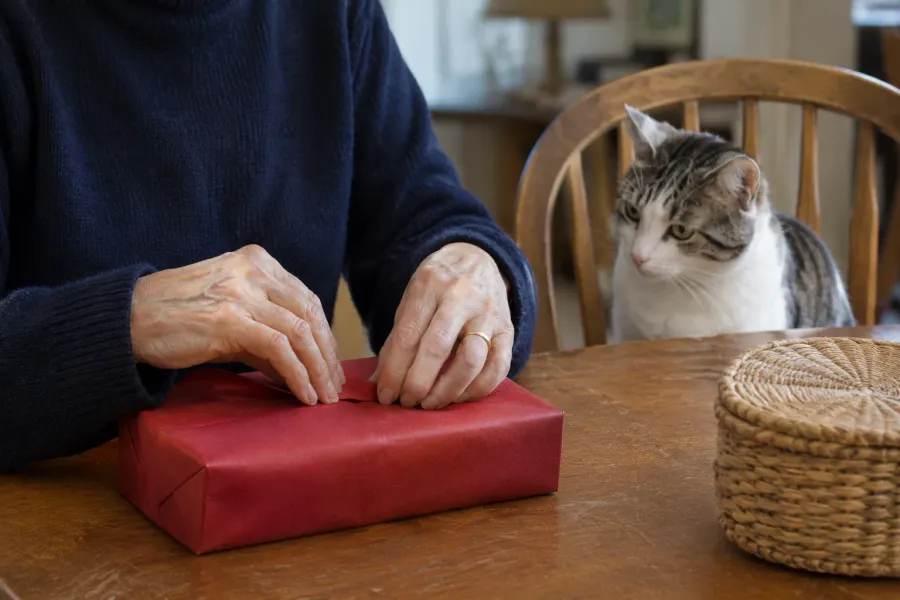
- Put ribbon and string away as soon as the wrapping is done, in a drawer or a basket with a lid.
- Gather up the wrapping after gifts are opened, before she gets to the ribbon.
- Watch for the cooking string too. String from a roast or a trussed turkey smells wonderful to a cat, so it should go straight into a covered bin.
One more thing worth knowing ahead of time. If you ever see string, ribbon or tinsel hanging from your cat’s mouth, or from under her tail after she’s used the litter box, don’t pull on it. The other end may be wrapped around the base of her tongue or caught in her stomach, and pulling can badly damage her insides. Take her to the vet, who can remove it safely.
For a cat like Cleo, who would happily play with ribbon all afternoon, a wand toy is a good substitute. It gives her the same chase, and the string stays in your hand.
The Holiday Table
Holiday food is rich, and a lot of it is left out on counters and low tables. A few things are worth keeping away from her plate and her reach:
- Turkey and chicken bones, which the ASPCA warns can be dangerous.
- Fatty scraps and skin, which can upset her stomach.
- Anything with onion or garlic, including stuffing, gravy and many sauces. The ASPCA notes that cats are especially sensitive to these.
- Raw bread or roll dough, which can keep rising in a cat’s stomach.
- Chocolate, especially dark chocolate and baking chocolate.
- Drinks, particularly anything with alcohol. A glass left on a coffee table is at the perfect height for a curious cat.
If you’d like to give her something special, a little of her own food or a cat treat at the usual time is the safest holiday dinner she could have. Leftovers are best wrapped up and put away promptly, and the trash kept behind a closed door or under a lid.
Candles
Candles and cats aren’t a good mix. A tail swishing past a flame or a cat jumping onto a table can knock one over. It’s worth keeping lit candles where she can’t reach, never leaving them burning in an empty room, and considering battery candles, which give the same glow with none of the worry.
Busy Days and Open Doors
Most years my parents travel to another family member’s home for Thanksgiving. When they do host, Cleo heads for their bedroom as soon as the house fills up, and she usually ends up asleep under the bed until everyone has gone.
That’s a sensible plan for any cat. A few things help on the busiest days:
- Give her a quiet room with her bed, water and litter box, and ask guests to leave it alone.
- Watch the front door. With people coming and going, ask one person to keep an eye on it.
- Keep bags zipped and off the floor, and ask guests to keep any medications in a closed cabinet rather than in a purse or suitcase, as the ASPCA suggests.
- Keep her mealtimes steady, even when the rest of the day isn’t.
There’s more on helping a cat through a houseful of people in When the Grandkids Visit. And if you’re the one traveling, Who Will Feed the Cat? covers who looks after her while you’re away.
If Something Happens
If you think your cat has eaten or touched something she shouldn’t have, don’t wait to see whether she seems unwell. Call your vet. If your vet’s office is closed for the holiday, the ASPCA Animal Poison Control Center is open every day of the year, around the clock, at (888) 426-4435. A consultation fee may apply.
It’s worth writing both numbers on a card and keeping it on the fridge before the holidays start, along with the address of your nearest emergency vet. You’ll very likely never need it.
A Quick Holiday Checklist
- No lilies in the house, in any bouquet
- Poinsettias up high; mistletoe and holly artificial
- Tree steady, water covered, breakable ornaments up high
- Light cords tucked away and unplugged at night
- Tinsel skipped, ribbon and string put away
- Bones, scraps, onion, garlic, dough, chocolate and drinks out of reach
- Candles where she can’t reach, or battery candles instead
- A quiet room for her when guests come
- Vet, emergency vet and poison control numbers on the fridge
A Safe and Happy Season
This December, Cleo will inspect the tree again, bat at the lowest ornaments and go looking for any ribbon my parents have missed. They’ll have put it away.
Wishing you and your cat a calm, cozy holiday season.