When the Grandkids Visit: Helping Your Cat (and Everyone) Enjoy It
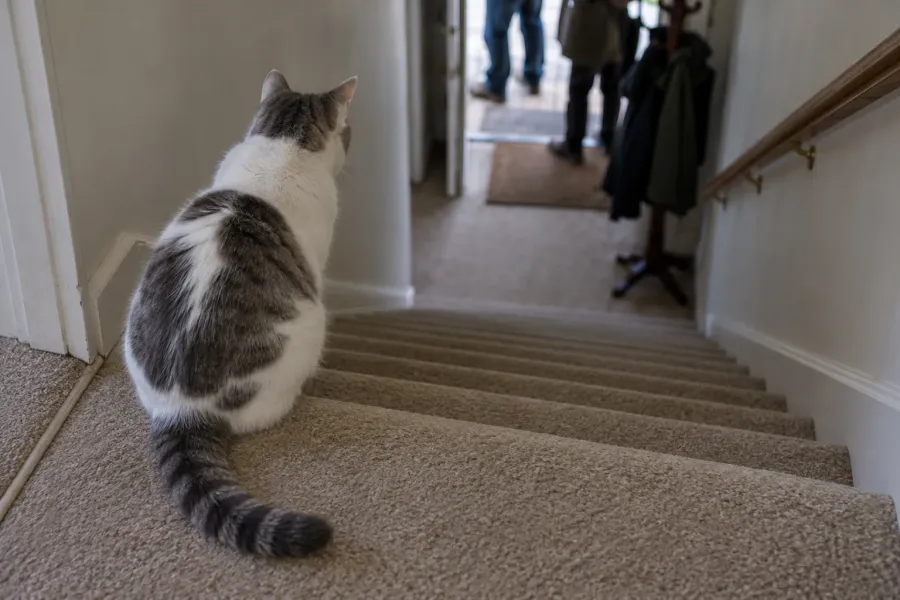
The knock comes, or the doorbell rings, and before anyone has reached the front hall, Cleo is gone.
She doesn’t wait to see who it is. She runs up the stairs and under my parents’ bed, and that’s where she stays while the coats come off and the hugs happen and the house fills with voices. My mom’s grandkids, who are 11 and 16, have visited plenty of times. Cleo has yet to come down to say hello when they walk in.
That’s not a sign anything is wrong. It’s how a lot of cats handle a houseful of people, and with a little planning, a visit can go well for everyone, including the one hiding under the bed.
Why a Visit Is a Lot for a Cat
Most cats like their home to be predictable. The same people, the same sounds, the same quiet stretches of the day. A family visit changes all of it at once: new voices and footsteps, unfamiliar bags and coats, doors opening and closing, and a routine that suddenly looks very different.
Hiding is a cat’s way of taking a step back until she understands what’s happening. It isn’t rudeness, and it isn’t a judgment of your grandchildren. Many cats need time before they’re ready to come and look, and some prefer to watch from a distance for the whole visit.
Make Sure She Has Somewhere to Go
Cleo chose her own hiding place years ago, and the most helpful thing my mom does is make sure it stays available. If your cat has a favorite retreat, keep the way there open on visit days, whether that’s a bedroom, a closet or the space under a bed.
If she doesn’t have a spot yet, you might set one up before everyone arrives: a quiet room with her bed, a bowl of water and somewhere to tuck herself away, much like the room we suggest for your cat’s first week home. It doesn’t need to be anything special. What matters is that it’s quiet, it’s hers, and the visitors know to leave it alone.
Keep the Day as Normal as You Can
My mom doesn’t make a fuss when the grandkids come. She doesn’t shut Cleo away or move her bowls. She simply carries on as usual, and that’s good instinct.
Cats take a lot of their cues from routine. If breakfast and dinner still happen at the usual times and her bowls and litter box stay where they always are, the visit is one change instead of several. On a busy day it’s easy for her mealtime to slip, so it can help to set a reminder. There’s more on why those steady mealtimes matter in building a daily routine with your cat.
Let Her Watch First
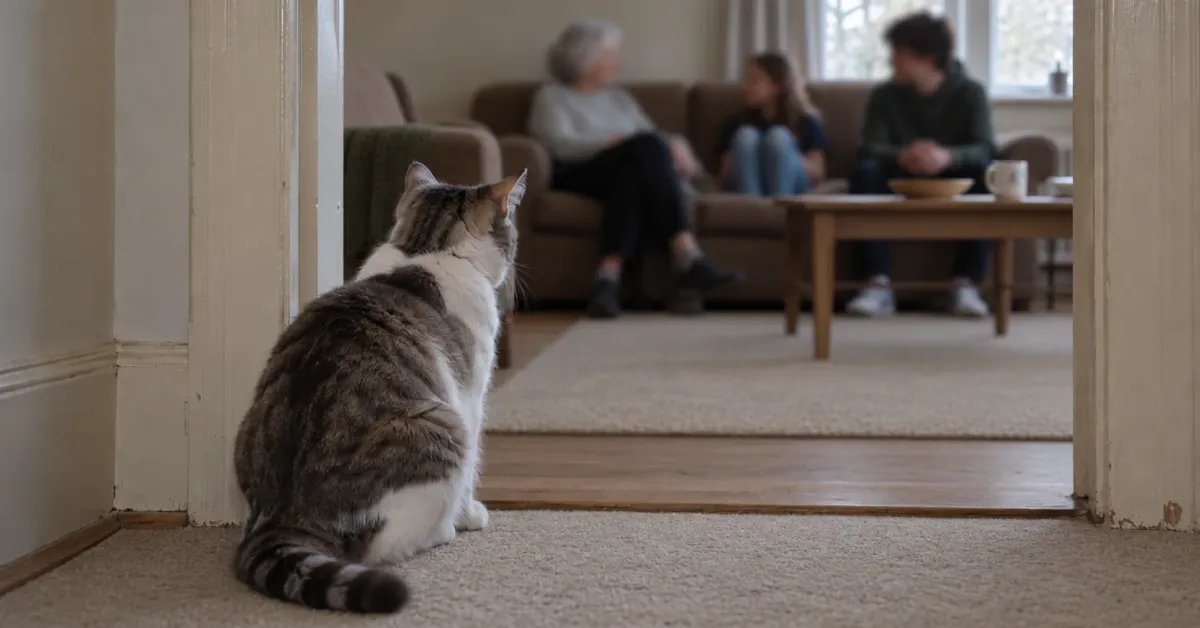
After about half an hour, Cleo usually comes back downstairs. She doesn’t come into the room where everyone is gathered. She sits in a doorway or in the next room and watches.
That’s progress, even if it doesn’t look like much. She’s deciding for herself whether these people are worth getting to know, and the best thing everyone can do is let her.
A few simple guidelines for the grandchildren help a great deal:
- Let her come to you. If she approaches, sit still and let her sniff a hand. If she doesn’t, that’s fine too.
- Gentle strokes only, and only if she’s asked for them. No picking her up, no following her.
- When she walks away or goes to her room, leave her be. Her hiding place is off limits.
- Use quiet voices near her. Not silence, just calmer than usual.
How you put this depends on the children’s ages. Younger children usually do best with one or two simple rules and a grown-up nearby. Older grandchildren can understand the reasons, and they’re often happy to help. A job that respects her space, like putting her dinner down at the usual time or trailing a wand toy slowly across the floor from a distance, gives them a way to connect without crowding her.
Watch the Doors and the Bags
Cleo has never tried to slip out during a visit, but plenty of cats do. Doors open and close more on visit days, and a cat who’s unsettled may look for a way out.
It helps to ask one person to keep an eye on the front door, or to remind everyone as they arrive. Keep suitcases and bags zipped and off the floor where you can, and pick up any food that gets dropped or left on a low table. If you’re unsure whether something is safe for your cat, your vet is the best person to ask.
After Everyone Leaves
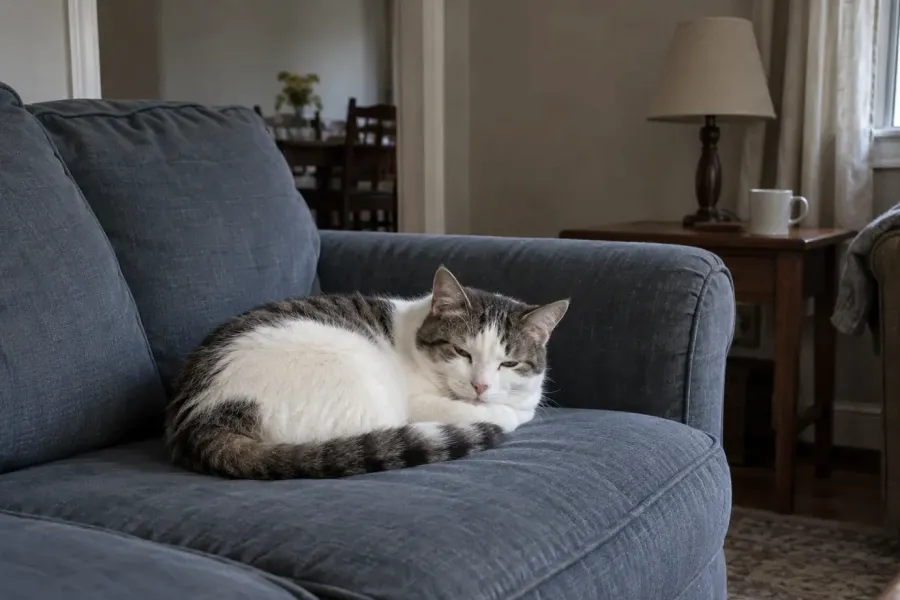
When the car pulls away, the house goes quiet again, and Cleo comes back out. For an hour or so she’s a little on edge, checking the rooms and listening for anyone who might still be there. Then she’s back to herself.
If your cat is unsettled for a while afterward, give her some quiet time. Keep the evening calm, put her dinner down at the usual time, and let her come to you.
Once the house is quiet again, most cats gradually settle back into their usual routine. If she’s still hiding the next day, call your vet. If she hasn’t eaten for a day, call right away, since a cat going without food for 24 hours needs prompt care, as VCA Animal Hospitals explains.
On Her Own Schedule
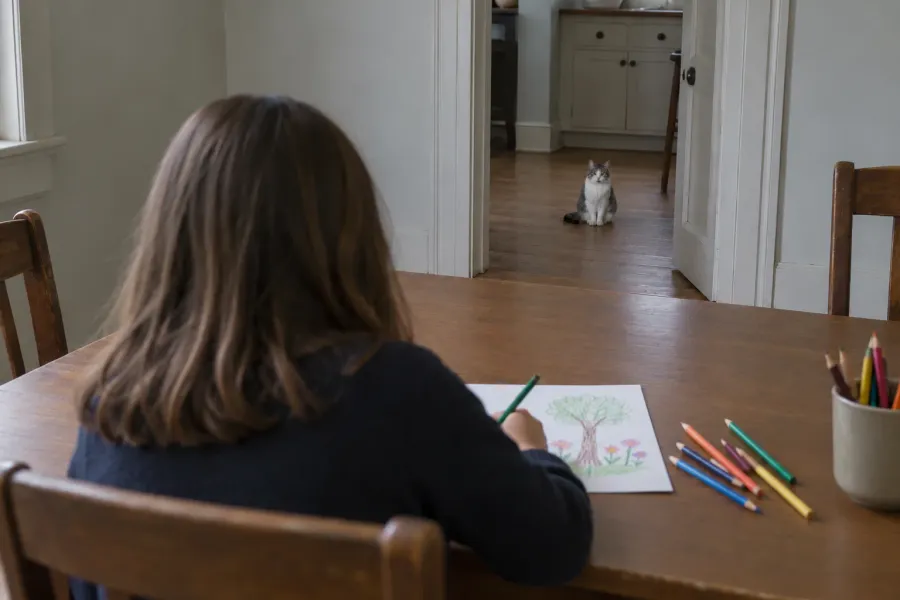
Cleo hasn’t come close enough to the grandchildren yet to give them her famous slap for trying to pet her. They watch her from one side of the doorway, and she watches them from the other.
Maybe next visit she’ll come a little closer. Either way, it’ll be her decision.