Who Will Feed the Cat? Planning for Trips, Appointments and the Unexpected
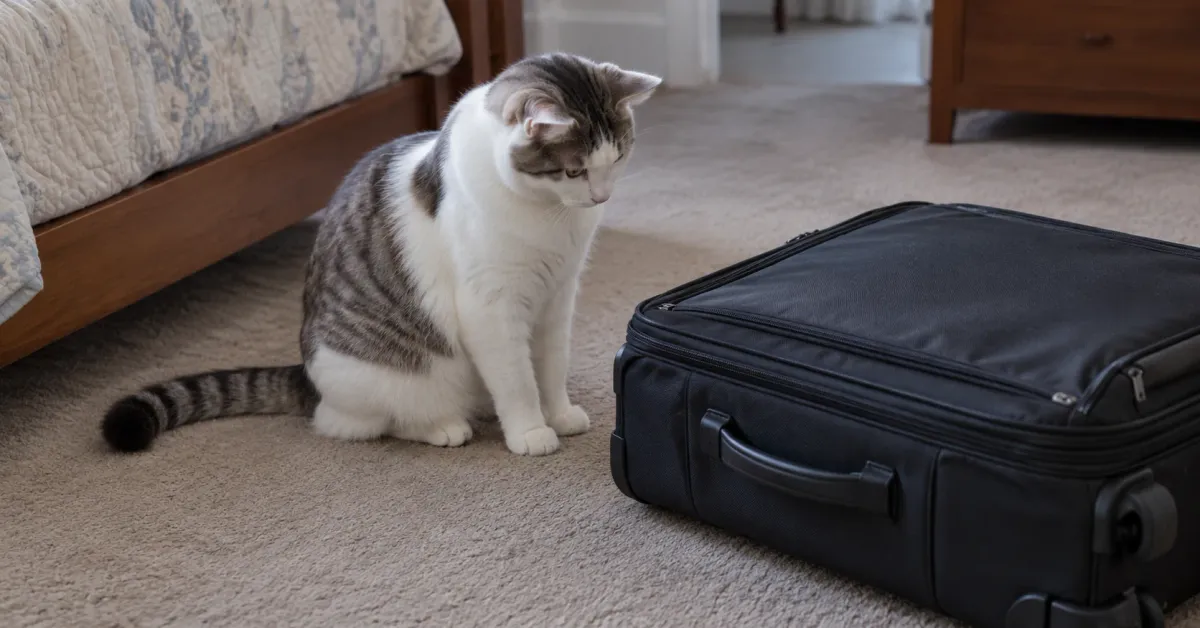
A few times a year, my parents pack for a trip. And a few days before they leave, a sheet of paper appears on the kitchen counter, written in my mom’s handwriting, for my brother.
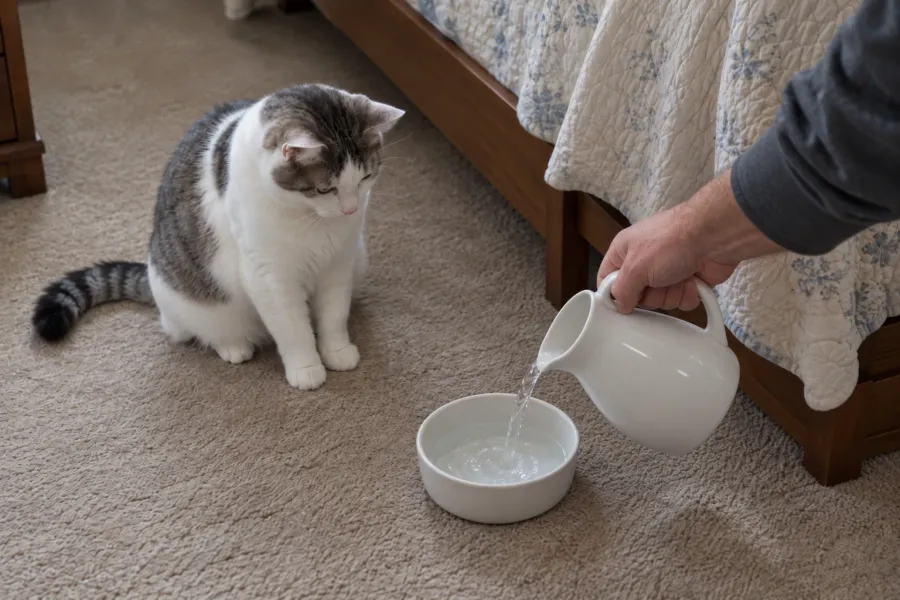
It’s a checklist. Feed Cleo. Check the water bowl in the upstairs bedroom, too, not just the one in the kitchen. Scoop the litter box. My brother is very fond of Cleo, but he doesn’t always remember the upstairs bowl, and my mom has stopped leaving that to chance.
Whether you travel often or hardly at all, sooner or later the question comes up: who will look after the cat? It’s much easier to answer calmly, ahead of time, than in a hurry.
Why It’s Worth Planning Before You Need It
Most of the time, looking after a cat is simple. You’re home, the routine runs itself, and nobody needs to think about it.
The harder moments are the ones that come up at short notice: an appointment that runs long, a family visit that turns into an overnight stay, or a hospital stay nobody planned. Having a plan already in place turns those moments into one phone call instead of a scramble.
Home Is Usually Best
Cleo has never been boarded. My mom has never boarded any of her cats, and Cleo has never left the house when my parents travel. Someone comes to her instead.
For most cats, that’s the gentler choice. Cats Protection describes having a sitter visit her at home as “the least stressful option,” especially for a nervous cat. Her own bed, her own window and her own smells stay exactly where they were, and only the person who feeds her changes.
Boarding at a cattery or your vet’s office can still work well, particularly for a cat who’s comfortable around strangers or needs close supervision. If you go that way, it’s worth visiting first and asking how they handle a shy cat.
Choose Someone She Knows
The best helper is someone your cat already trusts. For Cleo, that’s my brother. He lived with my parents for a few years when she was a kitten, and she has never forgotten him.
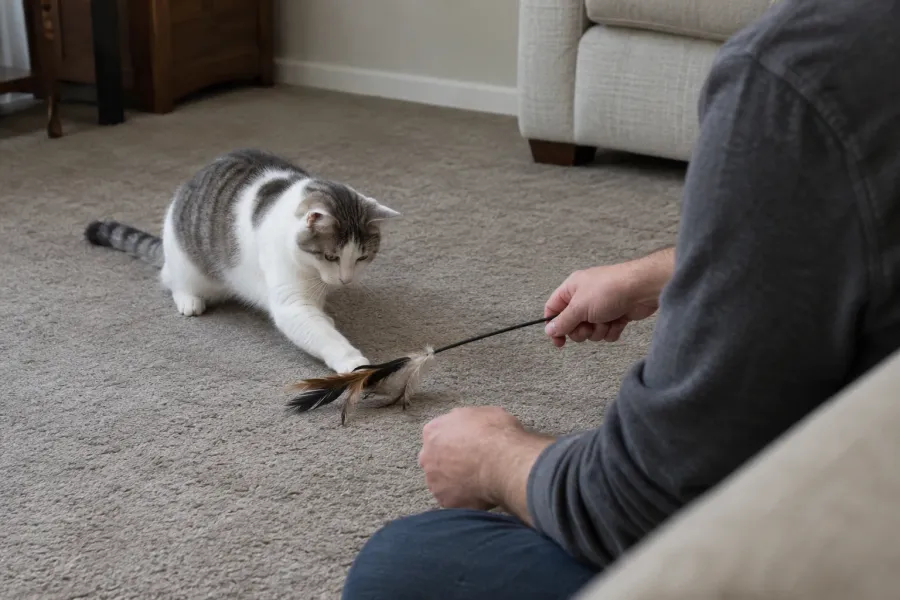
The difference shows. When visitors come, Cleo is under the bed before they’ve taken their coats off. When my brother comes over, she comes out to meet him and follows him around the house. He’s also the only person she lets play rough with her. She’ll slap him, claws in, but she never bites.
If your cat doesn’t have a person like that yet, you can help one along:
- Ask a neighbor, friend or family member to stop by a few times before your trip, while you’re home.
- Let them feed her, so she connects them with something good.
- Show them her hiding places, so they know where to look if she doesn’t come out.
A shy cat may stay hidden the whole time someone new is visiting. That’s normal. What matters is that the food goes down, the water bowls are filled, the litter box is scooped, and someone checks quietly that she’s eating.
How Often Someone Should Stop By
It’s tempting to think a cat can manage on her own for a couple of days with enough food and water put out. Cat welfare groups advise against it. Cats Protection recommends a sitter who can visit at least twice a day, and more often for older cats or cats with health conditions.
Regular visits aren’t only about topping up the bowls. They’re how someone would notice if something were wrong. A cat who hasn’t eaten for a day needs prompt veterinary care, as VCA Animal Hospitals explains, and the only way anyone can spot that is by being there.
If twice a day is more than your helper can manage, it’s worth asking a second person to share the visits, or looking into a professional pet sitter for longer trips.
Write It All Down
My mom’s checklist isn’t a comment on my brother. It’s simply the reliable way to make sure nothing gets missed, especially the things that aren’t in plain sight, like that second water bowl upstairs.
A good cat-care sheet fits on one page and covers:
- Food: what she eats, how much, and when
- Water: where every bowl is, including any upstairs or out of the way
- Litter: where the box is and how often to scoop it
- Her habits: where she sleeps, where she hides, and what’s normal for her
- Who to call: your vet’s name and phone number, and how to reach you
- A backup: one more person who can step in if your helper can’t
Leave it somewhere obvious, like the kitchen counter or the fridge door. If your helper does this often, keep the sheet and simply update it before each trip.
Planning for the Unexpected
Trips are planned. The harder situations are the ones that aren’t: a fall, a sudden hospital stay, a car that breaks down a long way from home. A few small steps mean your cat is looked after even if you can’t make the call yourself.
- Make sure at least one person nearby has a key and knows your cat’s routine.
- Keep a small card in your wallet saying you have a cat at home, with the name and number of the person who can look after her.
- Tell your helper where the cat-care sheet lives, so they can find it without you.
None of this needs to be worrying. It’s the same sort of sensible preparation as keeping a spare key with a neighbor, and once it’s done, you won’t need to think about it again.
Coming Home
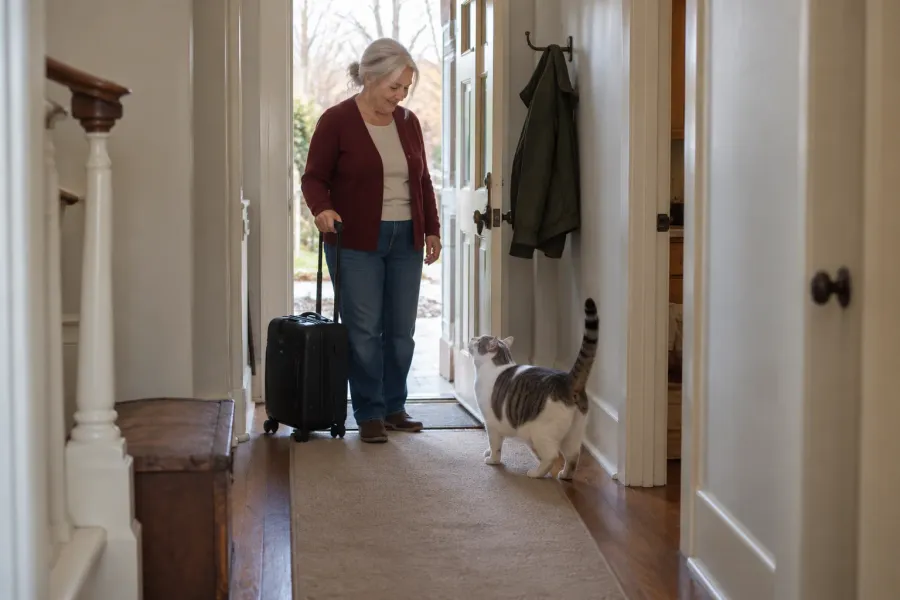
When my parents get back, Cleo is more talkative than usual. She follows them from room to room and has plenty to say about it. After a day or so, she settles back into her usual habits.
Many cats are a little clingy, a little aloof or a little louder for a while after their people return. Give her some time, keep her routine steady, and let her catch up with you in her own way.
The Checklist on the Counter
My mom will write that checklist again before the next trip, the upstairs water bowl near the top. Cleo will come out to meet my brother when he lets himself in. And when my parents come home, she’ll have a day’s worth of things to tell them.
This post is part of our complete guide to getting a cat in retirement.