If you’re thinking about adopting a cat in retirement, there’s a good chance the kitten enclosure is where your eyes go first. And honestly, that makes complete sense.
Those tiny paws. The way they chase absolutely anything that moves. The sheer audacity of a creature that small taking on a ball of yarn like it owes them money.
If you’ve ever spent five minutes with a kitten and not felt your heart do something, you may want to check your pulse.
So this isn’t about talking you out of that feeling…
It’s about suggesting that before you follow it straight to the kitten enclosure at your local shelter, you might take a short detour past the adult cats first.
Because one of them might be exactly who you’re looking for.
What You See Is What You Get
Here’s something that doesn’t get said enough about adult cats: the guesswork is gone.
A kitten is a promise. A lovely, fluffy promise, but a promise all the same.
That bold, playful little creature tumbling around the shelter floor might grow into a lap cat who follows you from room to room.
Or she might become a fiercely independent cat who tolerates affection on her own schedule and nobody else’s. At eight weeks old, there’s simply no way to know.
A three, four, or five year old rescue cat is a different proposition entirely.
Her personality is fully formed.
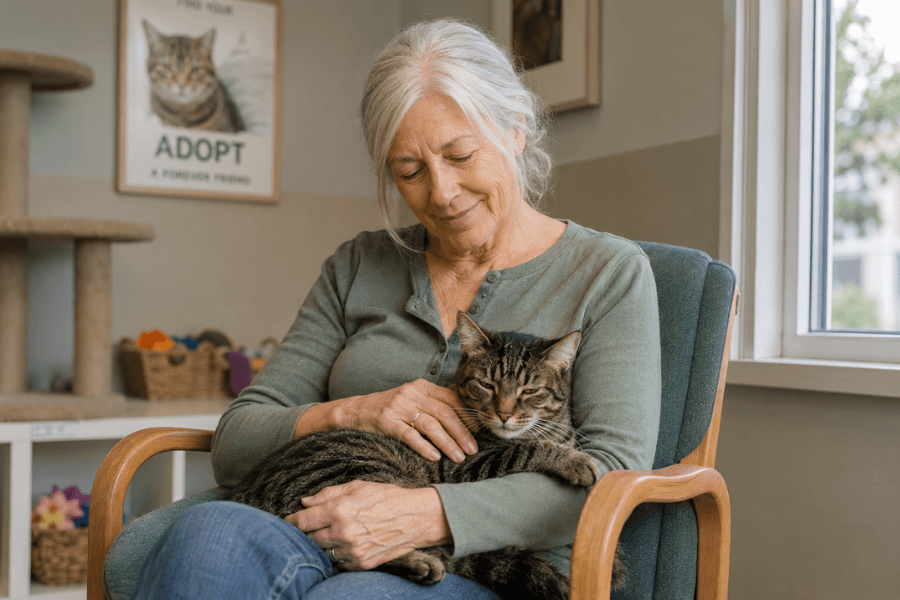
You can sit with her at the shelter and know, fairly quickly, whether she’s the kind of cat who climbs into laps or the kind who prefers to be nearby but not on top of you.
Whether she’s comfortable being handled.
Whether she’s curious about strangers or takes her time warming up.
What you see, in other words, is genuinely what you get.
After spending decades making decisions with incomplete information, that’s a refreshing thing.
The Kitten Phase Is a Lot, and That’s Worth Knowing
Kittens are wonderful.
They’re also, in practical terms, quite a lot to take on.
The first several months with a kitten involve a level of supervision and energy that catches many people off guard.
Kittens are active at night, often at length.
They scratch furniture while they’re still learning what’s appropriate and what isn’t.
Research consistently shows that scratching behavior peaks between four and twelve months and settles down significantly as cats mature.
They get into things.
Cabinets, houseplants, the one shelf you really needed them to leave alone.
They have accidents.
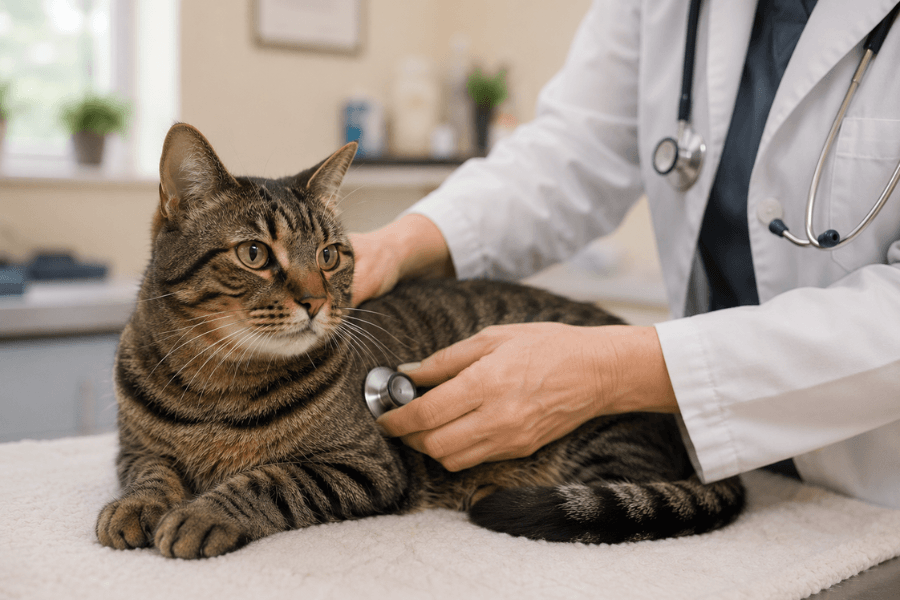
They need multiple vet visits in their first year to complete their vaccination series, and those visits add up.
None of this is a reason to never adopt a kitten.
But it is worth being honest that the kitten phase asks something real of you, in time, in patience, and in energy.
A calmer, equally wonderful alternative may be sitting in a shelter nearby, hoping someone will notice her.
Your Routine Is Already Worth Something
One of the quieter advantages of retirement is that you’ve built a life with a real rhythm to it.
Morning routines that feel right. Afternoons with a shape to them. Evenings that belong to you.
A kitten, in those early months, disrupts that rhythm…
Not permanently, and not catastrophically, but noticeably.
There’s a period of adjustment that involves reorganizing around a small creature who hasn’t yet learned the household rules, the quiet hours, or where she is and isn’t welcome.
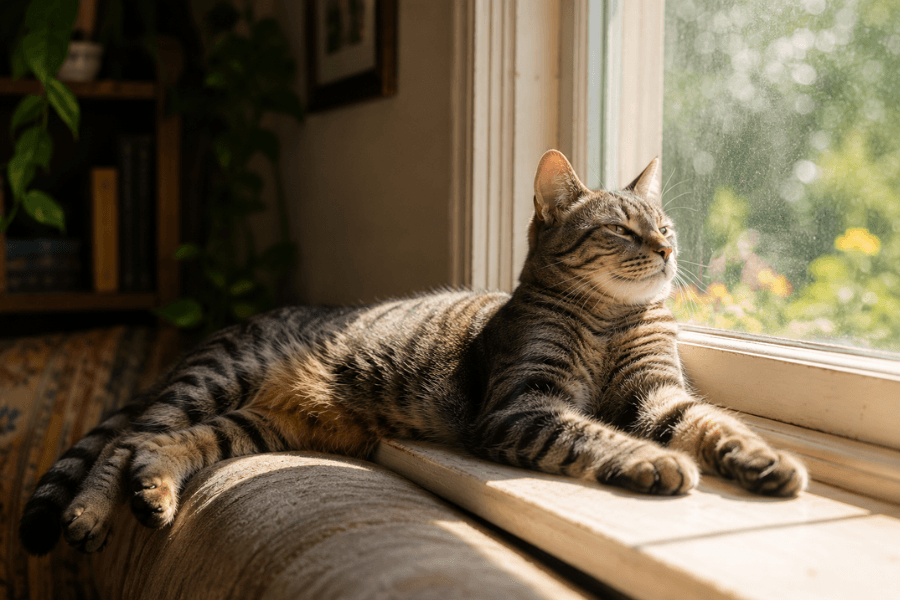
An adult rescue cat steps into an established home very differently.
She’s already lived with people. She understands the basic shape of domestic life.
The adjustment period is usually shorter, calmer, and far less likely to involve anything being knocked off a shelf at two in the morning.
You’ve worked to build a retirement that feels like yours. The right cat will fit into it.
A cat aged somewhere between three and six has real energy and curiosity, while also being settled enough to share a quiet afternoon without turning it into an obstacle course.

The Budget Case Is Real
This one is worth a mention, particularly for anyone managing a fixed income.
Adopting a kitten from a shelter typically means a first year that includes a full vaccination series across multiple vet visits, spay or neuter surgery if not already done, and all the starter supplies.
Estimates for first-year kitten veterinary care alone run between $1,000 and $2,000 depending on your location and clinic.
An adult rescue cat from a shelter is a different picture.
Most are already spayed or neutered, up to date on vaccinations, and microchipped.
Those costs are typically folded into the adoption fee, which is usually modest. And many shelters reduce or waive adoption fees for adult cats entirely.
After the first year, a healthy adult cat in the 3-6 year range is generally the least expensive age group to care for.
Past the intensive kitten stage, and not yet at the point where age-related health considerations become a factor.
It’s a practical sweet spot for anyone keeping a careful eye on the budget.
You’d Be Giving a Home to a Cat Who Really Needs One
Here’s a quiet fact that might stay with you.
Kittens at shelters are adopted at a rate of around 82%.
Adult cats, meaning cats aged eighteen months and older, are adopted at closer to 60%.
The math on that gap, repeated across every shelter in the country, means a very large number of perfectly wonderful cats spending a very long time waiting.
Not because anything is wrong with them. They’re just past the phase that attracts the most attention, that’s all.
The woman who adopts one of those cats gives her something she may have been waiting a long time for: a home, a routine, a person of her own.
And in return, she gets a companion who is ready, right now, to be exactly that.
What to Look For: The Sweet Spot
If this has you thinking about paying a visit to your local shelter, here’s some practical guidance on what to look for.
When adopting a cat in retirement, cats in the three to six year range are worth seeking out specifically.
Old enough that the kitten energy has settled. Young enough to be playful, curious, and fully engaged with the world.
Personalities established, habits formed, ready to slot into a new home without much fuss.
When you visit, ask the shelter staff what they know about the cat’s history and temperament. The good ones will tell you honestly.
Spend some time with any cat you’re considering, not just a few minutes.
Let her come to you rather than reaching for her immediately. Notice whether she’s curious or anxious, settled or on edge.
Pay attention to what you feel in that room, not just what you see.
The cat who climbs into your lap unprompted, or the one who sits nearby and watches you with calm, interested eyes, is telling you something.
Trust that.
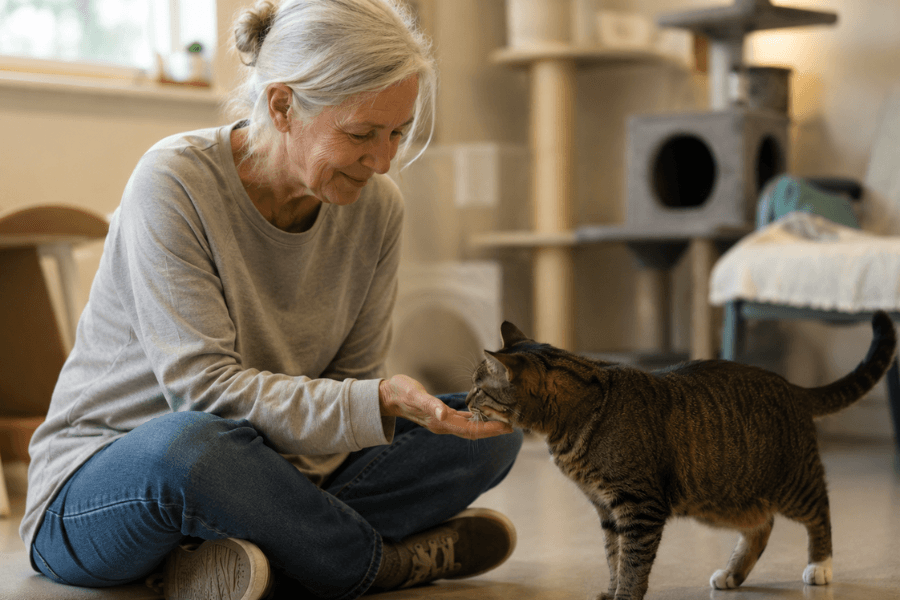
She’s Already There
The retirement you’ve built has a particular feeling to it.
Certain rhythms, certain comforts, a pace that suits you. You know what your mornings look like. You know what kind of company you want at the end of a quiet afternoon.
Right now, in a shelter not far from you, there’s a cat who’s past the chaos of kittenhood and ready for exactly that kind of home.
She’s calm. She’s herself. She just needs someone to walk past her enclosure and stop.
Here’s to finding each other.